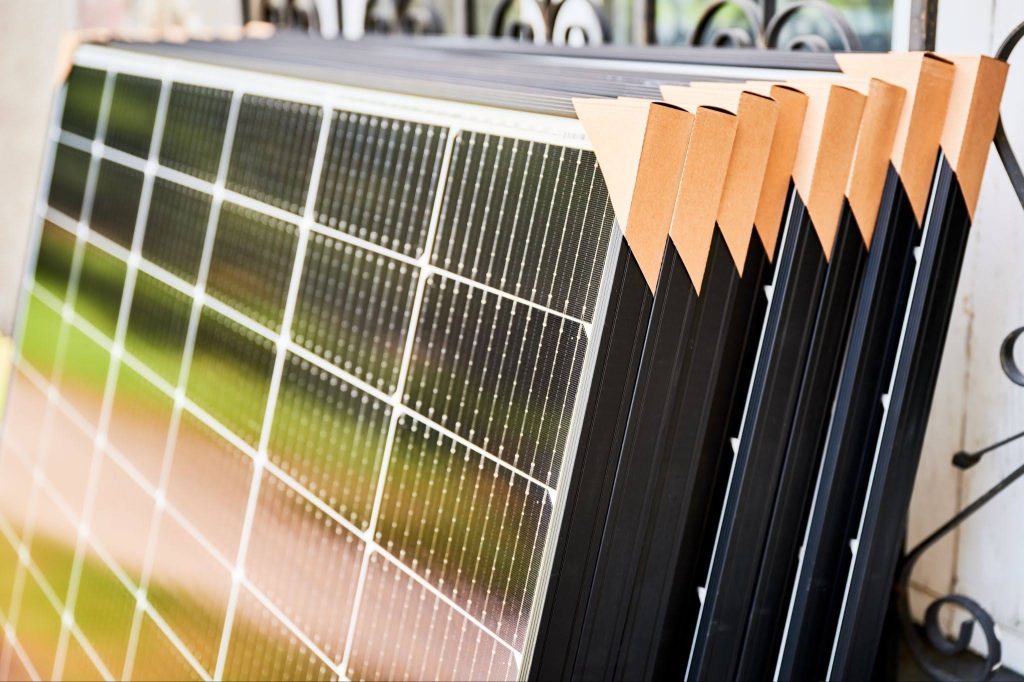

Singapore does not offer a direct cash grant or subsidy for installing solar panels on private homes. That is the short answer straight from the Energy Market Authority (EMA).
But that is not the whole story: a working combination of sellback schemes, tax treatment, green financing and business-facing grants means solar can still be one of the most cost-effective upgrades a homeowner or company can make in 2026.
This guide walks through exactly what “solar panel grant Singapore” searches actually turn up, why the government has taken this approach, and which schemes are genuinely worth your time – whether you own a landed property, run a business, or manage a commercial building.
Does Singapore Offer Solar Panel Grants? What EMA Says
According to EMA’s own FAQ page, the Government does not provide grants or subsidies to further incentivise the adoption of solar energy, because the cost of solar photovoltaic (PV) systems has fallen below the retail electricity price and regulated tariff.
In other words, solar has become commercially viable on its own, so a cash incentive is considered unnecessary.
This is a deliberate policy stance, not an oversight. Singapore has generally favoured market-based mechanisms such as feed-in payments, tax treatment, financing support over one-off subsidies, on the view that a system dependent on government cheques is less sustainable than one that pays for itself through genuine savings.
EMA does point toward adjacent support for energy efficiency more broadly, including the Building Retrofit Energy Efficiency Financing (BREEF) scheme and the Building and Construction Authority (BCA)’s BuildSG Transformation Fund, which lists other funding schemes that may apply to a specific project.
What Support Exists Instead of a Direct Grant?
While there is no solar panel grant in the traditional sense, several government-backed mechanisms reduce the effective cost of going solar. Here is how they compare:
| Scheme | What It Does | Who It’s For |
| Simplified Credit Treatment (SCT) | Pays for exported solar electricity at the prevailing tariff, less grid charges | Non-contestable consumers (buying from SP Group) |
| Enhanced Central Intermediary Scheme (ECIS) | Pays for exported solar electricity at the half-hourly wholesale electricity price | Contestable consumers (buying from a retailer) |
| Renewable Energy Certificates (RECs) | Lets solar owners sell certified green-energy credits for extra income | Owners exporting at least 1 MWh a year |
| Green bank loans | Preferential financing rates for solar and energy-efficiency upgrades | Homeowners and businesses |
Sellback Schemes: SCT vs ECIS
EMA runs two payment schemes for consumers exporting surplus solar electricity to the grid, and which one applies depends on how you buy your electricity.
- Simplified Credit Treatment (SCT) – applies if you buy electricity directly from SP Group. Your exported energy is credited at the prevailing tariff rate minus grid charges (the cost of maintaining and operating the network), which typically works out to around 70–75% of the regulated tariff.
- Enhanced Central Intermediary Scheme (ECIS) – applies if you buy electricity from a retailer in the Open Electricity Market. Payments track the half-hourly wholesale electricity price (WEP), so returns fluctuate with real-time market demand rather than staying fixed.
Your solar installer typically handles registration under either scheme as part of the installation process, so there is little for the homeowner to manage directly.
Renewable Energy Certificates (RECs)
Beyond the sellback schemes, solar owners exporting a minimum of 1 MWh of electricity a year can register to sell Renewable Energy Certificates.
Each REC represents 1 MWh of renewable generation, and companies without their own solar installation can purchase RECs to offset their carbon footprint and meet sustainability targets. For solar owners, this is a genuine secondary income stream on top of SCT or ECIS payments.
Carbon Tax Avoidance
Singapore’s carbon tax, levied on power generation companies, adds a small but rising cost to every unit of grid electricity. Every kilowatt-hour generated and consumed from your own solar system avoids that pass-through cost.
As the carbon tax climbs toward its 2030 target, this avoided cost becomes a larger, compounding saving over the lifetime of a solar system – effectively functioning as an informal, rolling subsidy that grows each year rather than a one-off payment.
Green Financing: Bank Loans for Solar
Singapore’s major banks offer dedicated green loan products aimed at solar and energy-efficiency upgrades, with preferential interest rates versus a standard personal or renovation loan.
These are not grants, the loan still needs to be repaid but they lower the barrier to going solar without a large upfront cash outlay, and the interest cost is often well below the value of the electricity savings generated.
DBS, OCBC and UOB each offer their own green loan or solar financing programme. The Monetary Authority of Singapore (MAS) continues to support this space through its broader green finance framework.
SolarNova: Singapore’s National Solar Programme
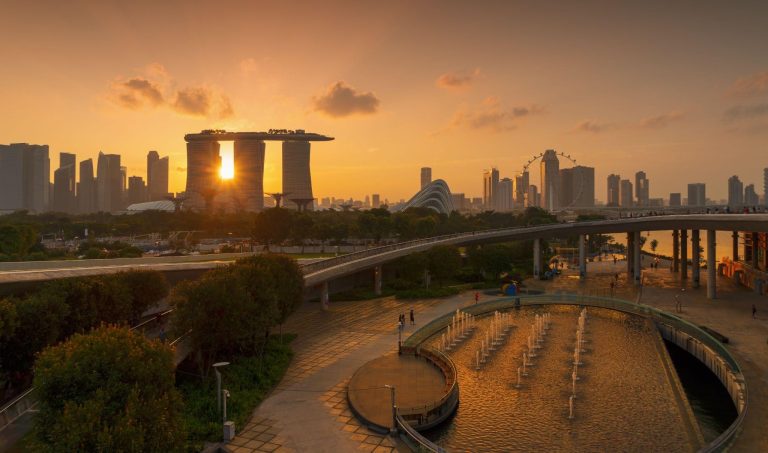
SolarNova is the Government’s flagship solar initiative, jointly led by the Housing & Development Board (HDB) and the Economic Development Board (EDB). Launched in 2014, it aggregates demand across public agencies and tenders large-scale solar installations on HDB blocks, government buildings and other public sector rooftops.
It is easy to see why SolarNova gets pulled into “solar grant Singapore” searches. It is the single largest government solar programme by capacity. But it is a public-sector procurement scheme, not a grant private homeowners or businesses can apply to.
What it has done indirectly is help bring down installation costs across the market, build a larger pool of experienced BCA-registered installers, and push grid infrastructure upgrades that benefit private solar adopters too.
Can HDB Flat Owners Get Solar Panels?
Generally, no – not on an individual basis. HDB owns the rooftops of its blocks, not the individual flat owners, so a private resident cannot commission their own rooftop solar installation on an HDB block.
Solar on HDB estates comes exclusively through SolarNova, and the electricity generated typically offsets common services such as lift operation and corridor lighting rather than crediting an individual household’s bill.
Landed property owners like terrace houses, semi-detached homes and bungalows are the ones able to install and own a private rooftop solar PV system.
Grants Often Mistaken for Solar Grants
Several genuine government grants surface in “solar panel grant Singapore” searches because they touch on energy efficiency or sustainability more broadly. It is worth being precise about what they actually cover, since assuming otherwise can lead to a wasted application.
Energy Efficiency Grant (EEG)
Administered by Enterprise Singapore and BCA, the Energy Efficiency Grant co-funds investment in pre-approved energy-efficient equipment for eligible businesses. It is not a solar-specific grant. Eligibility is currently limited to six sectors – Construction, Data Centres, Food Services, Manufacturing, Maritime and Retail.
The Base Tier covers up to S$30,000 per company (70% support for SMEs, 30% for non-SMEs), with an Advanced Tier capped at S$350,000 combined for equipment demonstrating significant carbon reducing.
At Budget 2026, the EEG was extended to 31 March 2027, and a subsequent Ministerial Statement announced plans to expand the Base Tier to all sectors and extend it further to 31 March 2028, with details to follow.
For most businesses considering solar, the EEG’s MP pre-approved equipment list is worth checking directly rather than assuming solar panels qualify.
BREEF and the BuildSG Transformation Fund
The Building Retrofit Energy Efficiency Financing (BREEF) scheme and BCA’s wider BuildSG Transformation Fund support energy-efficiency retrofits and broader sustainability upgrades for buildings.
Like the EEG, these are general energy-efficiency mechanisms rather than dedicated solar grants, though a specific project may find a relevant scheme listed there worth exploring alongside solar plans.
Support for Commercial and Building Owners
Green Mark Incentive Scheme for Existing Buildings (GMIS-EB 2.0)
Introduced by BCA on 30 June 2022 as part of the Singapore Green Building Masterplan, GMIS-EB 2.0 supports energy-efficient retrofits for existing buildings with a minimum gross floor area of 5,000 square metres, covering commercial, industrial and eligible residential building types.
Support can reach up to S$1.2 million or 50% of qualifying costs, prioritising buildings that achieve higher Green Mark certification tiers. The scheme runs until available funds are fully committed or 31 March 2027, whichever comes first so it is worth confirming current fund status before factoring it into a project timeline.
A solar PV installation can contribute to a building’s Green Mark score, making GMIS-EB 2.0 relevant to commercial and industrial property owners considering solar as part of a wider retrofit.
Who Is Eligible to Install Solar Panels in Singapore?
- Landed property owners – Terrace houses, semi-detached and detached homes, and bungalows can install a private rooftop solar PV system, subject to EMA registration and SP Group grid connection.
- HDB flat owners – Rooftop solar on HDB blocks is managed exclusively through SolarNova. Private commissioning is not available to individual flat owners.
- Condominium owners – generally not on an individual-unit basis, since rooftop space is managed collectively by the management corporation.
How to Maximise Solar Savings Without a Grant
Without a cash grant to rely on, the practical approach is to stack the incentives that do exist. A typical landed-home installation combines a green bank loan to cover upfront cost, SCT or ECIS payments for exported electricity, REC income where eligible, and rising carbon tax avoidance over the system’s lifetime.
Together, these can bring the payback period for a well-sized residential system down to a matter of years rather than decades though the exact figure depends on system size, roof orientation, household consumption and current tariff rates, so it is worth getting a site-specific quotation from a BCA-registered installer rather than relying on generic estimates.
Conclusion
The honest answer to “are there solar panel grants in Singapore” is no. Not in the form of a direct cash payment. What exists instead is a layered system of sellback schemes, tax advantages, green financing and business-facing grants that, taken together, can make solar a sound financial decision without a subsidy cheque.
Understanding which mechanism actually applies to your situation like a landed homeowner, HDB resident, or commercial building owner is the first step to making solar work for you in 2026.
This article is for general informational purposes and reflects publicly available information from EMA, BCA and Enterprise Singapore at the time of writing. Scheme terms, funding availability and rates change over time. Always verify current details with the relevant agency or a licensed solar installer before making a decision.